
Santa Monica Expert Painting repaired several damaged areas of drywall before repainting our bedroom. The repaired sections blend perfectly with the surrounding walls, and the finished room looks clean and polished.
Drywall Repair and Painting in Santa Monica, CA That Disappears Into the Wall
Santa Monica Expert Painting is the Westside's trusted expert in drywall repair and interior repainting, specializing in taping and mudding, texture matching, and skim coating to a smooth finish. We offer water-damage patching, ceiling repair and plaster restoration alongside modern drywall work. Fully licensed, insured and bonded.
From feathering a three-coat joint across a 1908 bungalow hallway to priming and rolling a room corner to corner, our team handles every detail. Serving Santa Monica and nearby Brentwood, Bel Air and Malibu, we find what caused the damage and quote the repair and the repaint together so the finished wall reads as one surface.
- Free estimate, cause diagnosed first
- Texture sampled on a board
- Zip walls and vacuum sanding
- Licensed, insured and bonded
Reviews
What clients say about our repair work
Beautiful exterior painting and excellent workmanship from beginning to end.
We hired the team to paint several units in our rental property. The walls, doors, and trim were finished neatly, and each space looked fresh and ready for new tenants. The results made a noticeable difference.
Our commercial storefront needed an update, and Santa Monica Expert Painting delivered exactly what we wanted. The new color scheme looks clean and professional, giving the building a much stronger street presence.
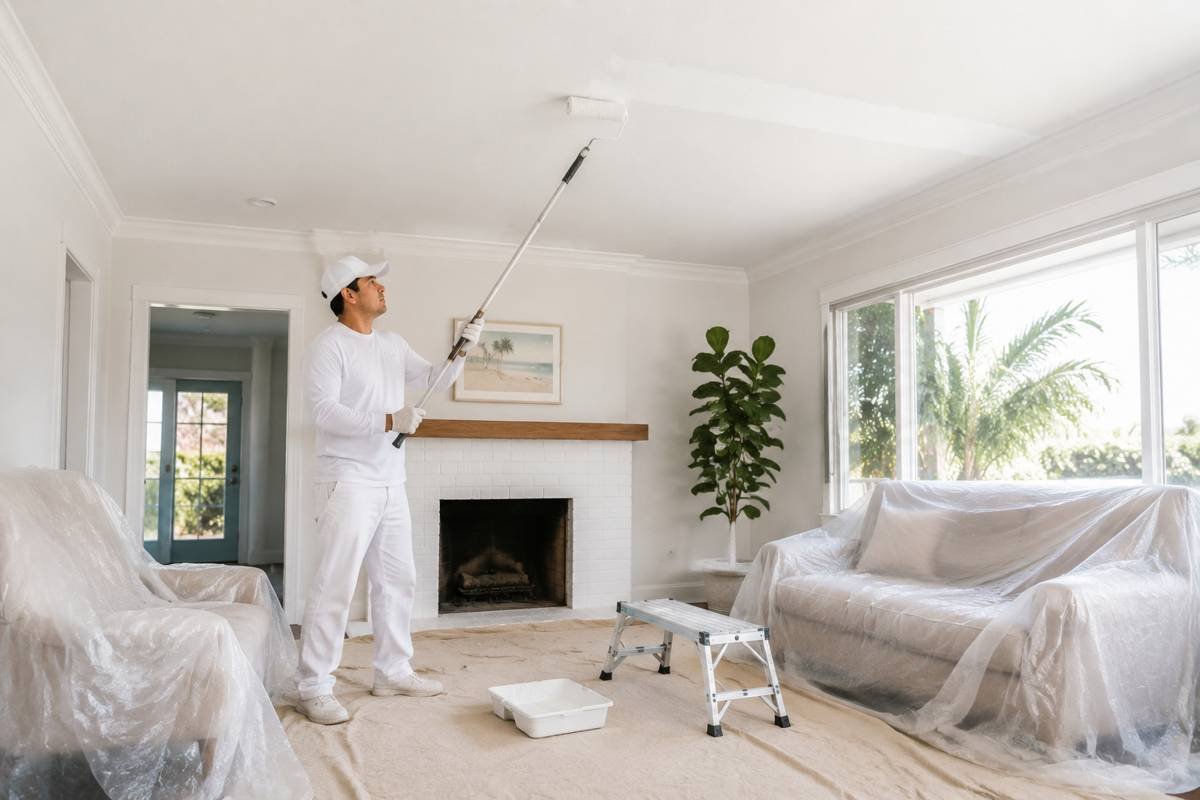
The ceiling painting came out smooth and even. The room feels much cleaner and brighter now.
We had peeling paint and minor surface damage on the outside of our home. The team prepared the problem areas carefully before applying the new paint. The finished exterior looks smooth, durable, and professionally restored.
Great work on our doors, baseboards, and interior trim. Every line looks crisp and precise.
Santa Monica Expert Painting transformed our older home with fresh interior and exterior paint. The preparation work was thorough, the color coverage was consistent, and the finished surfaces look outstanding. The entire property now feels well maintained and updated.
01
Drywall repair services we offer
We look at the damage, find what caused it, and quote the repair and the repaint together so the finished wall reads as one surface.
Nail pops and screw pops
A fastener backs out as framing dries and shrinks, and a dome of compound breaks loose. The fix is not more mud. We set a new screw an inch and a half away, reset the failed fastener, then coat in three passes.
Cracks at corners and openings
Diagonal cracks off the upper corner of a door or window are the most common call we take. They follow the weak point in the framing, so skimming over one puts the crack back within a year. We cut the joint out and rebuild it.
Doorknob and impact holes
Anything up to a few inches gets a hard backing patch and three coats. A mesh-only disc telegraphs a ring under low-angle light.
Large cut-outs and sheet replacement
Plumbing access, electrical remodels, a cut for a mini-split line set. We block the opening, screw new board in plane, tape and finish.
Water-damaged drywall and ceilings
Soft board, brown rings, sagging tape. Compromised material comes out, new gypsum goes in, and the stain is sealed rather than painted over.
Ceiling repair and texture
Raking light crosses a ceiling all day, so it is the hardest plane to repair invisibly. These repairs end in a full-plane recoat.
| Material | Where it goes | Why |
|---|---|---|
| Setting-type compound (hot mud) | First fills, deep repairs, same-day work | Chemically sets rather than air-drying, so it shrinks less and lets us stack coats in one visit |
| All-purpose joint compound | Bedding tape and general coats | Strong bond and predictable sanding |
| Lightweight topping compound | Final skim passes | Sands easily and feathers wide without gouging |
| Paper and mesh tape | Flat joints, inside corners, patch perimeters | Paper is the strongest reinforcement when bedded; mesh is faster under setting compound |
| Bonding agent and gypsum plaster | Lath and plaster repairs | Keys new material to old plaster instead of sitting on top of it |
| Stain-blocking primer, shellac or oil | Water rings, smoke, tannin, marker | Locks stains under the film so they cannot bleed through latex |
| 100% acrylic latex, flat to eggshell | Wall and ceiling topcoats | Rule 1113 compliant low-VOC, washable in eggshell, forgiving in flat |
02
Our repair and repaint process
Nine stages, checked under a raking light rather than an overhead fixture.
Diagnose the cause
A crack, a stain and a bulge all have a source. We identify it before mixing anything.
Protect the room
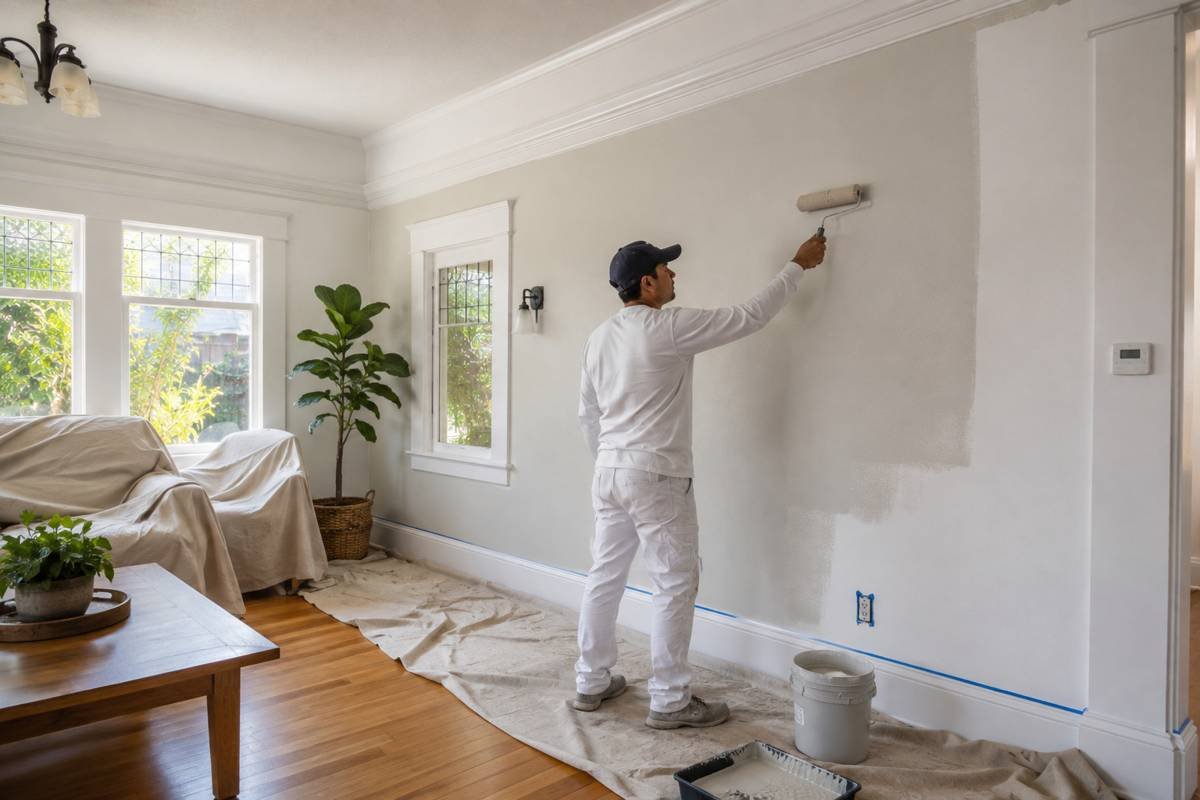
Floors covered, furniture sheeted, doorways sealed with zip walls, dust collection on the sanders.
Cut back to sound material
Damaged board and loose compound come out, squared up so the patch has clean edges to key to.
Back and board
Blocking behind the opening, new gypsum screwed in plane with the existing wall.
Tape and mud
Bed the tape, then two to three widening coats, feathered 10 to 16 inches past the joint.
Sand and inspect
Pole sanding and vacuum sanding, checked under a raking light.
Match the texture
Sprayed or hand-applied to the surrounding surface, knocked down where the wall calls for it.
Prime
Drywall primer over the repair, stain-blocking primer where anything might bleed.
Paint corner to corner
Two coats across the full wall or ceiling plane, then a walkthrough under the room's own lighting.
03
The five levels of drywall finish
Knowing which of the five industry finish levels you are buying prevents most arguments about a finished wall.
Levels 0 to 2
Level 0 is no finishing, temporary construction only. Level 1 is tape bedded in compound, for plenum spaces nobody sees. Level 2 is tape plus one thin coat, behind tile or in a garage.
Levels 3 to 5
Level 3 is tape plus two coats, used under heavy texture, not under paint alone. Level 4 is tape plus three coats, sanded smooth, the house standard for flat paint and light texture. Level 5 adds a skim coat over the whole surface, required for gloss, deep colours and any wall raked by natural light.
Which one your room needs
Most Santa Monica living rooms need Level 4. A wall facing a west window over Ocean Avenue is a Level 5 wall whether the plans say so or not, and finishing it to Level 4 means seeing every joint at four in the afternoon.
Texture matching
Texture is where amateur patches announce themselves. Orange peel is a fine sprayed stipple, standard from the 1970s onward. Knockdown is a heavier spray flattened with a blade a minute after it lands. Smooth demands Level 5 discipline. Skip trowel is laid on by hand with a curved knife and carries the signature of whoever troweled it, so it is the hardest to reproduce. We match by sampling: a test board is textured, dried and held against the wall before anything is sprayed on your ceiling.
04
Water damage: find the leak first
We do not repair water-damaged drywall until the source is fixed and the cavity is dry. Painting a wet wall traps moisture and the stain returns within a season.
On this coast the sources are predictable: roof or flashing failure after the rain that runs late October through March, a shower pan or supply line, bathroom condensation, or a stucco crack letting wind-driven rain into the assembly on an ocean-facing elevation.
Once it is dry the sequence is fixed. Cut out compromised gypsum, check the framing behind it, replace the board, then seal the remaining stain with shellac or an oil-based primer. Latex will not hold back a water or tannin stain. It looks fine on day one and ghosts through within weeks.
Why a patch needs a full wall repaint
A perfect patch can still look terrible after paint, and the reason is flashing. Fresh joint compound is more porous than the painted wall around it, so it drinks the topcoat differently and the sheen breaks even when the colour matches. You get a dull halo where the repair sits.
Priming fixes the porosity but not the second problem: the surrounding paint has aged. Even a leftover gallon from the original job has shifted, and the film on the wall has taken years of UV through a south-facing window, cleaning and settled dust. So we prime the repair, then repaint the entire plane, corner to corner, stopping only at an inside corner or a ceiling line. Spot painting is cheaper on the invoice and more expensive in practice. Where several walls are involved, a full room repaint under our interior house painting service costs little more than the piecemeal alternative.
05
Plaster is not drywall
A large share of Santa Monica's oldest housing predates gypsum board, and those walls behave nothing like a sheet of gypsum.
The Third Street Neighborhood Historic District, designated July 1, 1990 as the city's first, holds 38 contributing buildings from 1875 to 1930, including 27 bungalows built between 1903 and 1915. Ocean Park carries similar stock. Those walls are wood lath and three-coat lime plaster.
Plaster fails differently. It cracks along lath lines and delaminates when the keys, the plaster that squeezed through the lath gaps and hardened behind it, snap off. A wall can look solid and be hollow behind the surface. Joint compound in that situation makes a hard, stiff spot in a soft, slightly flexible wall, and the repair cracks around its own perimeter within a couple of years.
So we repair plaster as plaster. Loose sections are re-anchored with plaster washers before anything is filled, damaged areas get a bonding agent and a gypsum plaster basecoat built in lifts, then a finish coat troweled to match the original sand float. That plaster predates 1978 by decades, so lead-safe practices apply as a matter of course, and designated properties may route colour and treatment through the Landmarks Commission, covered on our restoration painting for designated properties page.
What shapes the estimate
The number of repair locations, ceiling height, whether the texture is a simple orange peel or a hand skip trowel, how far the paint runs before a natural break, plaster versus drywall, and whether lead-safe containment applies. The EPA RRP rule covers pre-1978 housing, a large share of the stock in Ocean Park and the Pico Neighborhood.
06
Frequently asked questions about drywall repair
Can you repair a hole and paint the same day?
Small repairs often can, using setting-type compound that stacks coats in hours. Water damage needs drying time between stages.
Why does my patch still show after painting?
Almost always flashing, a sheen difference caused by the repair absorbing paint differently than the aged wall around it. Priming and painting the full wall corner to corner solves it.
Can you match my existing texture?
Yes, for orange peel, knockdown, smooth and most skip trowel. We sample on a board and hold it against the wall before spraying.
What if the drywall is wet?
The leak gets fixed first and the cavity dries out. Repairing over trapped moisture guarantees the damage returns.
Do you paint over water stains or seal them?
Seal them with a shellac or oil-based stain-blocking primer. Latex alone lets the stain ghost back within weeks.
My house is from 1910 and the walls are plaster. Can you work on it?
Yes. Plaster gets re-anchored with washers, bonded, and built up in gypsum plaster lifts with a matching finish coat. It is not patched with joint compound.
How long does a repair and repaint take?
A single room is usually two to three days including dry time. Multi-room and plaster work runs longer.
07
Related services and where we work
We repair and repaint across ZIP codes 90401 through 90405: lath and plaster with failing ceiling keys in Ocean Park and the Third Street district, post-war drywall and orange peel matching in Sunset Park and Mid-City, smooth Level 5 walls and high ceilings north of Montana, and condo repairs on building access rules downtown and along Wilshire and Ocean Avenue.
- Interior House Painting
- Ceiling Painting
- Wallpaper Removal & Repainting
- Kitchen Cabinet Painting
- Venetian Plaster & Specialty Finishes
- Historic Home Restoration Painting
Every painting service we offer.
Service areas
Outside the city we cover canyon homes in Brentwood, foothill estates in Bel Air, coastal properties along Pacific Coast Highway in Malibu, and small multifamily in Hermosa Beach. See the areas we serve for the full list.
Book your drywall repair and repaint
We inspect the damage, identify the cause, and price the repair and repaint as one scope so the wall finishes flat, matched and flash free.
- Free written estimate
- Repairs primed before finish coats
- Licensed, insured and bonded